
Tuesday, September 03, 2013
App of the Week - Educreations
Educreations is one of those apps that are king in the classroom.
It is easy to use, really intuitive, and it gives a blank screen for students and teachers to record, draw, insert images.
Some activities that you can use Educreations for:
- students record examples of what they´ve learned
- students can talk about likes/dislikes, physical description of characters they draw...
- students can tell a story
- students can have a map in Educreations, one gives the directions, the other draws the way as they record the instructions to get to a place
- students can practice a dialogue
- students can interview each other and add images as they go along
- students can work on their book projects, drawing and recording a scene of the book
- teachers can use the app as an interactive whiteboard, even recording what they did as they explained something and then send it to the students
- teachers can record a lesson (explanations, tutorials) and send it to students
Learn how to use the tool and schedule some time during your lesson to add some Educreations fun to your classes:
Here are some examples of what teachers did with their students using educreations. Browse through the lessons our students and teachers have worked on in Educreations: http://www.educreations.com/profile/894009/?page=1
Browse through lessons from other teachers and students to get inspired at http://www.educreations.com/browse/

APPtivity of the Day - Using Dictionaries in the Classroom
Sometimes we think that we can only schedule to use the iPads when we feel confident enough, have practiced many times how to open, close, use the features in certain apps. We practice so much that we give up as insecurity increases exponentially when we give a thought about the students we have, the little time we have in our schedules, added to the responsibility of those devices in nervous hands.
WORRY NOT!
Ruben Puentedura´s model for tech incorporation can be a relief for teachers in the sense that it is OK to start with substitution practices that enhance the learning experience towards a more informed and bold move towards transformative uses of tech in the classroom.

So, instead of the distress of considering tech possibilities and never having the fearlessness to try it, start with a fun and very simple activity and then move on to more challenging activities.
Did you know that in our CTJ iPads we have fantastic dictionaries you can use with your groups?
Here are some:

The first one on the list (LDOCE 5) is an expensive paid app which is worth every penny for the quality of its digital version - Longman Dictionary of Contemporary English 5th Edition.

You can´t imagine how much fun my teen students have had with this app. We searched for some words they were studying, I asked them to check the pronunciation of American x British English and to see if there was any relevant difference. They could see the words in use, including collocations and idiomatic expressions.
The activity was nothing new, but the teens spent some minutes having fun with the language and exploring the possibilities of use. We then played a game in which I´d say the word, they needed to check the meaning and come up with an example different from the dictionary´s.
Later in the semester, when they had to write paragraphs, they asked me if they could look up for synonyms in the dictionary!
Now, if it worked with a rambunctious group of teens, imagine exploring the wonders of the dictionary use with our adult groups! You could explore high frequency words (identified in red in the app); you could have a treasure hunt, pronunciation work, definition game. The world of possibilities using digital dictionaries in class is simply limitless...In addition to making your lessons more engaging, your students will start noticing the possibilities of the devices they use in their daily lives to learn English.
So, the first part of your tech integration ladder is done: substitution activities using a dictionary app.
Ready for the challenge?
What kinds of activities with dictionaries do you envision with your groups?
Let us know when you plan a lesson using the dictionary apps and what the outcomes were.
Tip: Dictionary.com is a very good free app that your students can download to their smartphones and tablets.
Tuesday, August 27, 2013
Setting Guidelines for IPad Usage in Class

I was browsing through my reader when I came across a short but relevant post on Eudemic. The author tells us a short story to convey the message that every house has different practices, and that teachers should not assume all our students will have been taught the same way to take care of the expensive devices we bring to class. One thing is for sure: we do want students to use the IPads to be creative and enjoy the lessons, but we also want them to be careful and keep the devices fully functioning. The solution? The post aforementioned suggests we clearly communicate device usage guidelines to students. I`ll download a larger sized version of the graphic below available at Teachers Pay Teachers (free) because it is well designed and very informative, go over the rules with students and use the IPads happily ever after.


Sunday, August 11, 2013
L1 in the L2 classroom: from a sin to a possibility

(cross-posted from http://isabelavillasboas.wordpress.com/)
As most people trained in the mid-80´s, I used to completely avoid using or referring to L1 in the L2 classroom. After all, as Scott Thornbury (2010) reminds us, the arguments against it are that:
As most people trained in the mid-80´s, I used to completely avoid using or referring to L1 in the L2 classroom. After all, as Scott Thornbury (2010) reminds us, the arguments against it are that:
- translation encourages a dependence on the L1, at the expense of the learner constructing an independent L2 system;
- translation encourages the notion of equivalence between languages, yet no two languages are exactly alike (although languages from the same language family may be similar in lots of respects);
- the L1 system interferes with the development of the L2 system;
- translation is the “easy” approach to conveying meaning, and is therefore less memorable than approaches that require more mental effort, such as working out meaning from context;
- the “natural” way of acquiring a language is through direct experience and exposure, not through translation.
I confess to having taught numerous groups of true beginners
without ever, ever speaking a word in Portuguese, our common native language,
in class. After all, what if they were in the U.S or the U.K, right? No one
would speak their language there, so we had to simulate this L2 environment. At
that time, I truly and naively believed that native speakers were the model for
an L2 classroom and that students’ L1 was mostly an interference to be avoided.
I’m sure this belief was also reinforced by the fact that English in regular
schools in Brazil, public or private, was based solely on translation and was
very ineffective, so doing anything similar to that should be avoided at all
costs.
It was only in the mid-90’s, when I first read what would be
one of my most cherished methodology bibles, Douglas Brown’s (2007) Teaching By Principles, that I came
across the idea that “the judicious use of the L1” can be beneficial. Wow! That
was already quite a stretch for me. But still, in the Methodology classes I
taught, I always emphasized the word judiciously, and explained that it was
really an exception, when there was no other way to explain a word or concept.

As time went by and a growing number of experts began
defending the idea that the native language can be a facilitative tool, rather
than just a hindrance or an interference (Atkinson, 1987; Auerbach, 1993; Cook,
2001; Nation, 2003), I slowly began to rethink my beliefs about this issue and,
as a teacher, adopt a greater tolerance towards the idea that we can use this
tool learners already have, their native language, to help them learn a second
language. Rather than a hindrance, the L1 can sometimes be a springboard, or
maybe the key to understanding. When teaching the present perfect, for example,
I started to show my students that in Portuguese you say “I have read that
book” and “I read that book yesterday” using the same verb (li), the reason why it was difficult for
Brazilians to understand the concept of the present perfect. I would thus warn
them that relating it to Portuguese wasn’t going to help. Conversely, when
Portuguese could indeed help them understand something, I began signaling this
to students, saying, “It’s just like in Portuguese.” With children, the idea of
giving them a few minutes in the beginning of the class to share whatever they
felt like sharing about their lives in the native language became more
acceptable. After all, they weren’t proficient enough to express themselves the
same way in English, yet they really needed the emotional bond.
Even so, my understanding of the debate about the role of L1
in the L2 classroom was still very pragmatic and “apolitical”. It was only when
I became more familiarized with Critical Applied Linguistics (Pennycook, 2001),
the Local Versus Global English debate and World Englishes, and the
Non-native-English-Speaking-Teacher movement (Braine, 1999) that my view of the
topic expanded. I began to understand all the historical, theoretical, and
political reasons behind the “English-only” policy, clearly explained by Mahboob
(2011) and summarized in an earlier post.
The fact that sharing the same L1 with my students was a strength rather than a
weakness really empowered me and made me rethink my role as a teacher and
teacher trainer and developer. I also enhanced my understanding that there was
a difference between using translation as a method and using the L1 system as a
reference for students, a facilitator.

Though I had “seen the light”, I also
still had many doubts:
- How far should the teacher go in resorting to the L1 when it can be facilitative without transforming the communicative classroom into a translation-based one?
- Might the teacher’s reference to students’ L1 make them feel more comfortable to use their L1 in class and not make as much effort to communicate in the L2, wasting the only time they have to do so (in the case of an EFL environment)?
- Might an excessive comparison or reference to the L1 hinder the development of students’ automaticity in the foreign language, creating an unnecessary “L1 bypass” in their brains?
Paul Seligson’s plenary in an event recently held at my ELT
Institute – the 2nd Alumni, CTJ, and Ibeu TEFL
Conference – shed some light
into this discussion and helped clarify it for me in certain ways. He
reasonably argued that “L1 is a tool to be used appropriately like any other,
and its use needn’t be verbal.” It can
involve parallel processing or systematic contrastive reflection, for example.
He suggested a number of awareness-raising activities that involve students
making comparisons between their L1 and EFL without having to say a word in
their L1. For example, students can think about whether the stressed syllable
in each of the months in English is the same or different from in Portuguese.
This can be done between Portuguese and English because the months in the two
languages are of Latin origin. Thus, we can capitalize on the fact that
Portuguese is a Romance language, that as much as 60% of English is
Latin-based, and that there are more cognates than false cognates between Portuguese
and English. Students can be trained to notice cognates and near cognates and
work out their meaning from context. This can be done without even using the L1
in the classroom, but rather, just asking students to think about it. Seligson
(2013) also argues that if we capitalize on the vocabulary that is Latin-based
when teaching beginners, we can speed up their learning and give them a sense
of being able to communicate adequately sooner, even if the words they’re using
aren’t necessarily the most frequently used by native speakers.
Some of the key ideas put forth by Seligson (2013) are:
- Highlight, use, and build on students’ strong, existing linguistic intelligence, addressing them as “insiders”, knowers, not “empty vessels” or aliens from another language planet.
- Consider making reference to L1 whenever it might help; celebrate and accelerate where things are similar, prioritize what’s harder, and make humorous links.
- L1 is a tool to be used appropriately like any other, and its use needn’t be verbal, e.g. parallel processing, systematic contrastive reflection, etc.
- Accelerate presentations using L1 contrast or references to give them more time for practice.
- Anticipate mistakes early on in lessons to help students avoid them.
- Use cognates to provide much richer text and input, and be explicit when you’re using cognates.
- Make systematic use of contrastive pronunciation to help break the habits they have acquired from L1.
- Our goal is to create successful language switchers, not just turn them into native speakers.
I opened this post with Thornbury’s (2010) list of arguments
against the use of L1. Now here is his list of arguments in favor, which
certainly inspired Seligson in his plenary:
- New knowledge (e.g. of the L2) is constructed on the basis of existing knowledge (e.g. of the L1), and to ignore that is to deny learners a valuable resource.
- Languages have more similarities than differences, and translation encourages the positive transfer of the similarities, as well as alerting learners to significant differences.
- Translation is a time-efficient means of conveying meaning, compared, say, to demonstration, explanation, or working out meaning from context.
- Learners will use translation, even if covertly, as a strategy for making sense of the L2, so it may as well be used as an overt tool.
- The skill of translation is an integral part of being a proficient L2 user, and contributes to overall pluralingualism.
- Translation is a natural way of exploiting the inherent bilingualism of language classes, especially where the teacher is herself bilingual.
Just the other day I was teaching a group of
low-intermediate adults and we came across the word “confident”, a
false-cognate in Portuguese. Unhesitatingly, I pointed out that confident meant
confiante, not confidente in Portuguese. Twenty years ago, I would probably not
have resorted to translation and tried to explain the word in English. Maybe
half of my students would have understood it, while half would still either be
in doubt or think that it meant confidente.
As you can see, I’m now a believer and, as a teacher, I
think I can make informed decisions about when to use or allow the use of L1 in
my classroom. However, as a teacher trainer and developer in an ELT Institute
with over 250 teachers, many of whom are novice, I confess I’m still reluctant
to openly advocate the use of L1. My
fear is that the arguments above become an overgeneralization for any use of
the L1 at any time, both by the teacher and the students. This would go against
our institutional pedagogical principles, which emphasize the need to maximize
L2 use in the classroom and authentic communication in L2 and, above all, our
students’ expectations. Thus, apart from L1 use for classroom management
purposes and others presented by Mahboob (2011), Seligson’s idea of having
students think about their L1 rather than actually use it in class might be a
sound suggestion.
And you? How do you feel about this issue as a teacher? And
as a teacher trainer/developer?
References
Auerbach, E.
(1993). Reexaming English only in the ESL classroom. TESOL Quarterly, 27, 1, pp.
9–32.
Atkinson, D.
(1987). The mother tongue in the classroom: A neglected resource? ETL Journal, 41,
4, pp.
241–24.
Braine, G.
(Ed.). (1999). Nonnative Educators in
English Language Teaching. Mahwah, NJ: Lawrence Erlbaum.
Brown, H. D.
(2007). Teaching by Principles – An
Interactive Approach to Language Pedagogy – 3rd Edition. White
Plains, NY: Pearson Education.
Cook, V.
(2001). Using the First Language in the Classroom. Canadian Modern Language Review, 57(3).
Mahboob, A .
(2011, August 31). Using local languages in English language classes [Web log
post]. Retrieved from http://www.nnestblog.blogspot.com.br/
Nation, P.
(2003) The role of the first language in foreign language learning. The Asian EFL Journal 5 (2). Retrieved
from http://asian-efl-journal.com/quarterly-journal/2003/06/30/the-role-of-the-first-language-in-foreign-language-learning/#thethe-tabs-1-4
(August 04, 2013).
Pennycook,
A. (2001). Critical Applied Linguistics
– A Critical Introduction. Mahway, NJ: Lawrence Erlbaum.
Seligson, P.
(2013). Advantaging Brazilian Learners.
Plenary delivered at the 2nd Alumni, CTJ, and Ibeu TEFL Conference.
Thornbury,
A. (2010, April 21). T is for translation [Web log post]. Retrieved from http://scottthornbury.wordpress.com/2010/04/21/t-is-for-translation/
Tuesday, July 23, 2013
Practical Ways of Developing Fluency
What do you do when a student asks:
“How do I improve my fluency?”
I attended the 2nd Alumni, CTJ, & IBEU TEFL Conference last week. One of the speakers, Michael McCarthy, talked about how fluency is one of these terms where everyone knows what it means, but have difficulty in defining it: Think about readiness. Think about spontaneity. Does the speaker have their independent ideas about the subject at hand? Fluency means “not causing strain to either the person listening nor feeling strain while speaking”.
Ok, so what does that look like? Here are some terms you need to know:
- Speed of delivery--how many words per hour does your student speak? Casual conversation is 10,000 words per hour! Your student doesn’t have to speak that fast when it comes to giving speeches, however.
- Pauses--your student should not pause for longer than half a second! A big “NO NO” is pausing when it is your turn to speak or in the middle of fixed phrases such as “You know what I mean?” You don’t want to say “You-- know-- what-- I mean.”
- Dysfluency--getting lost in your thoughts. You say, “What was I talking about?”
- Automaticity--that knee-jerk reaction when it comes to having response to fire off right away.
- Confluence--the ability to carry out a conversation in a way where you create opportunities for your listener to understand when your turn is almost over so that they are ready to start their turn--and they provide you with that same courtesy!
Let’s go back to the original question: “How do I improve my fluency?”
Here are some of my ideas:
- Have your student find a reading passage that they really respect or enjoy and have them read the passage. It should be a fairly decent length so that it can’t be done in two minutes. Have them read the passage aloud for two minutes and mark where they stop. The following week, have them read aloud again for two minutes and mark it again. How many words did they improve?
- Have your students keep up with current events. A great conversationalist knows what’s going on in pop culture, sports, science, politics, and art. Have them reflect on what they read and talk about it. Have them share their opinions with the class. Moderate a short debate!
- Provide them some fixed phrases, 3 word chunks, and other fillers. Ask them to insert these a few times during class discussions. They can be things that open phrases such as “Well, basically...” and other words that will create the end of the turn such as “.. you know what I mean?”. They have to use them quickly (speed of delivery) and automatically!
- Also, teach them how to stall for time such as saying “The whatcha-ma-callit?” or “thinga-ma-bob” and other phrases that native speakers heavily use when they are trying to claw their way through a conversation. Give them works such as YEAH, OH, RIGHT, WELL, and BASICALLY and teach them how to combine them in to “Oh, right” or “Yeah, that’s right” or “Well, yeah” or “Well, basically”. Use these to avoid pauses and stall for time to think! Other great words are “actually...” and “I mean...” when used to elaborate further on what you’ve already said.
- Great speakers don’t think about what they’re going to say next while their partner is speaking. Instead, they listen to what is being said and react to some part of that. Model how to do this for them and have them practice. Give them useful phrases such as "I hate to disagree, but..." and "I see what you mean..." The better they are at creating flow, the more fluent they will become.What are your ideas? Post them in the comments!
Saturday, July 20, 2013
Bring Your Own Device (BYOD) – Why should you try?

It is two
thirty in the afternoon. The teacher is introducing a new and important topic
and almost all students are attentively looking at and listening to him. A
couple of students, however, seem to be somewhere else. A teenage boy is
looking at his lap with a silly smile on his face. The teacher suspects this
has nothing to do with his class because once he is not telling any jokes at
the moment. A teenage girl on the other side has her right hand inside her bag
and is also involved in some kind of very important task. The teacher also
knows it is not part of the class because he has not assigned any task yet. He
has not asked students to make any sort of inventory of the content of their
school bags. This scene looks familiar, doesn't it? The two fictional students
are definitely texting or checking their social networks on their mobile
phones. How can a teacher handle such distractions? How to deal with the
handheld devices our students are bringing into our classes? In this post I
will try to give some hints on transforming these gadgets into our allies and
discuss some of the benefits of doing so.
The first
solution that comes to our minds when facing class distractions due to the use
of portable devices is banning them completely from coming into the temple of
our classrooms. Banning can range from not allowing students to bring such
gadgets to class to collecting them upon their arrival to asking students to
turn their gizmos off while in class. However, we can ask, is banning handheld
devices the solution?
Since
students have to carry their mobile phones to communicate with parents, it
becomes practically impossible to forbid them from bringing portable devices
into the classroom or asking them to turn their gadgets off. The option of
collecting mobile devices upon arrival is not very practical either and adds
one more throng into the challenging task of achieving effective classroom
management.
Banning
not being an option, one thing the teacher can do to avoid episodes of
disconnection from class is to make a contract with students telling them when
they will be allowed to check their phones. One idea would be telling learners
to restrict such activities to a time when they are done with written tasks and
are waiting for the remainder of the class to finish and do a peer to peer
check out. In regard to this rule, it is important to inform them that they
should not rush through tasks to have extra time to use their devices. Such
rule would mean never using mobile gadgets while the teacher is explaining
something or when the class is involved in communication activities.
Once the
teacher has addressed the banning issue and established a contract with his or
her students, it is time to look into some alternatives to have students use
their devices for other things than checking their social networks, chatting in
their native language or playing games. Doing so will make them really happy
and will probably reduce their craving for using their devices for other things
than getting engaged in learning activities while in class.
Using
students' devices bring many advantages. First, we can say that it solves the
logistic and economic problem of having one mobile device for student. Why does
the school need to buy these gadgets when students already possess their own.
Second, it saves time once the instructor does not need to instruct the class
on specific features. Third, it allows diversity instead if the unification of
class sets of laptops or tablets. Finally, it sends a strong message of
acceptance and inclusion to students once the handheld device they carry with
them almost everywhere is being valued by their teacher and transformed into a powerful learning tool.
References:
My colleague Erika Oya and I gave a presentation on the topic of BYOD in Brasilia at The 2nd Alumni CTJ and IBEU TEFL Conference. See our slides on Prezi
Hockly,N.(October 2012). Tech-savvy teaching: BYOD. Modern English Teacher, volume 21(number 4). Retrieved from http://www.academia.edu/2065524/Tech-savvy_teaching_BYOD
Thursday, July 11, 2013
Technology in the Language Classroom
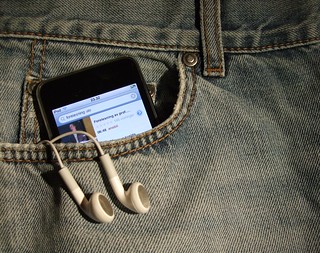
by Jose Antonio da Silva
According to an article on Wikipedia, the history of
education if considered as passing down traditions from one generation to
another is probably as old as the history of civilization. However, as
developmental psychologist Peter Gray reviewing the history of education in a
2008 blog post reminds us, the idea of universal education arouse in the 17th
century. It was then that, according to him, learning started being children’s
“work” aided by the expertise of adults. If in the beginning of its history
methods and techniques for teaching were mostly dictated by the adult in a
position of power, as time went by the pendulum shifted to cater more and more
to the needs of learners no matter how old they were. The advent of computer
technology made this relationship even more complex once these machines gave
tremendous power to students and placed higher and higher demands on teachers.
So, the objective of this post is to address some issues related to the
integration of technology into the EFL class.
An EFL teacher who started teaching in the early 90s in an
institution that tried to keep up with the latest technological gadgetry would
probably have at his disposal a slideshow projector, a tape recorder, and a TV
set with a VCR on the corner. By the end of the decade, the only item remaining
would be the TV set, the others would have been replaced by a computer on the
teacher’s table connected to the TV set which still might be connected to a
more modern VCR. Fast forward ten more years and changes in this area are
dramatic. The 21st century has brought with itself a lot of progress in this
field and things have not stopped evolving since then. Computer technology has
miniaturized and thus become ubiquitous and accessible to almost anyone. In
Brazil, according to a National Household Survey (PNAD) study, the number of
Internet users in the country increased by 10 million between 2009 and 2011. As
more and more technology makes its way into students’ lives and the classroom, teachers
have more and more trouble coping with these demands. The solution to this
problem may lie in finding ways to use this same technology not only as a means
of delivering content, but as a way of practicing inside class, and lastly of
extending learning beyond classroom and into students daily lives.
The first issue with such widespread use of computer devices
and connectivity arises with students bringing their portable devices into
class. If such devices are connected to the web, teachers are divided between
asking students to turn their devices off or using them in class for practicing
language and generating content. The argument for banning is reasonable and is
supported by some educators (Yamamoto, 2007). Devices can be a distraction and
really make students lose focus and let a teacher literally talking to the
walls. However, as Nicky Hockly (2012) claims, adopting a BYOD (bring your
device) approach gives students some autonomy and creates a ground for
negotiation between teachers and students. Students can use the photos they
have in their mobile phones to talk about themselves and show to classmates
what matters to them. Alternatively, they can go around school on photo
treasure hunts and do similar activities. The audio capabilities can be used to
record conversations that can be replayed in class or used to assess
pronunciation or other skills.
In contexts that are low tech and students do not carry
fancy mobile devices there is always at least a computer lab. If such facility is
not available, students can be encouraged to use their computers at home. The
idea is to move from a push content mind set to a pull content one, an approach
in which teachers see learners as active participants and producers or content.
So, instead of adopting a closed LMS environment in which educators exert
control and push content to students, a teacher can opt for the so called web
2.0 platforms that allow more freedom and customization, allowing the teacher
to push content from learners. The flipped classroom (Gerstein, 2012) idea
advocates exactly that, using blogs, wikis, podcasts, social networking and
other media to get extended practice and student generated content. Once
teachers connect students and their classes to the web, his initiative allows them
to see themselves as 21st citizens that are no longer just consumers of
content, but as creative and active participants in making their own learning, creating content, and contributing to the learning of others.
References
Gerstein, J. (2012). The Flipped Classroom: The Full Picture. Kindle Edition. Gray, P. (August 2008). A Brief History of Education. Psychology Today. Retrieved from http://www.psychologytoday.com/blog/freedom-learn/200808/brief-history-education
Gerstein, J. (2012). The Flipped Classroom: The Full Picture. Kindle Edition. Gray, P. (August 2008). A Brief History of Education. Psychology Today. Retrieved from http://www.psychologytoday.com/blog/freedom-learn/200808/brief-history-education
Hockly,N.(October 2012). Tech-savvy teaching: BYOD. Modern
English Teacher, volume 21(number 4). Retrieved from
http://www.academia.edu/2065524/Tech-savvy_teaching_BYOD
Yamamoto, K. (January 2008). Banning Laptops in the
Classroom: Is it Worth the Hassles? Journal of Legal Education, Volume 57
(Number 4). Retrieved from
http://papers.ssrn.com/sol3/papers.cfm?abstract_id=1078740
Subscribe to:
Comments (Atom)